• Renovation Country House Bloemcamplaan, Wassenaar

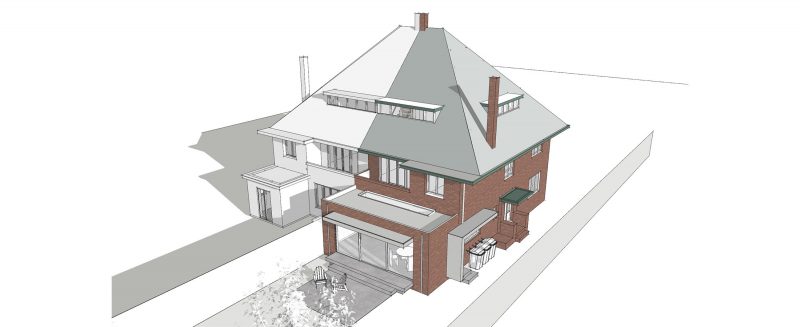
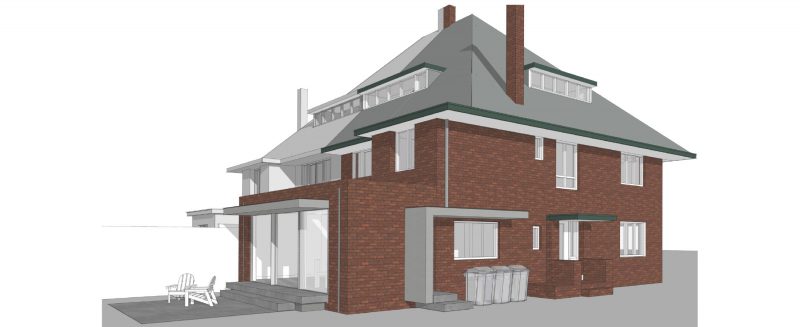
    This house is part of the semi-detached country houses built in 1937 on the Bloemcamplaan in Wassenaar. The building is designed in a typical 1930s country house style, built in brick and equipped with a hipped roof with tiles. 

    Characteristic is the separate kitchen next to the en-suite living room. The addition of a rear extension connects these two spaces and also creates a beautiful connection with the garden. The large sliding doors and an elongated skylight provide the living areas with ample daylight. 

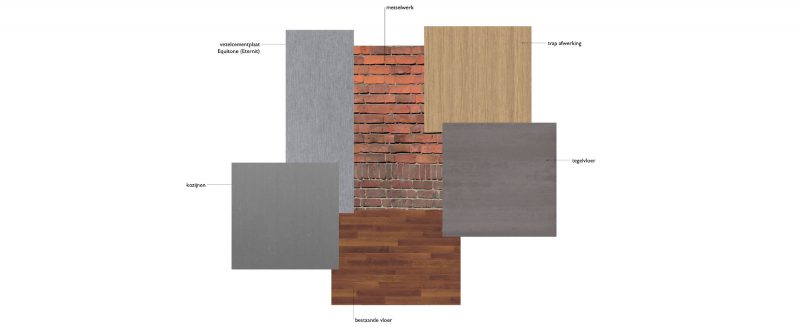
    The choice of an identical masonry stone for the extension ensures that the extension merges with the existing building. 
  • Implementation of loft in Leiden Nijverheidsschool started

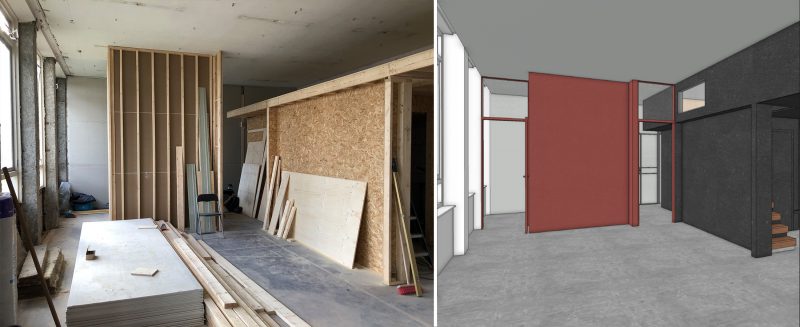
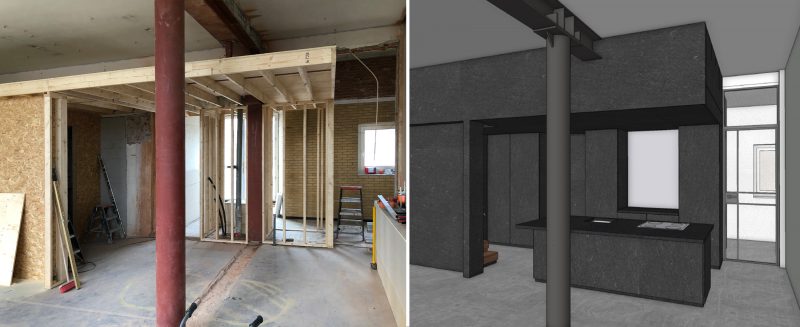
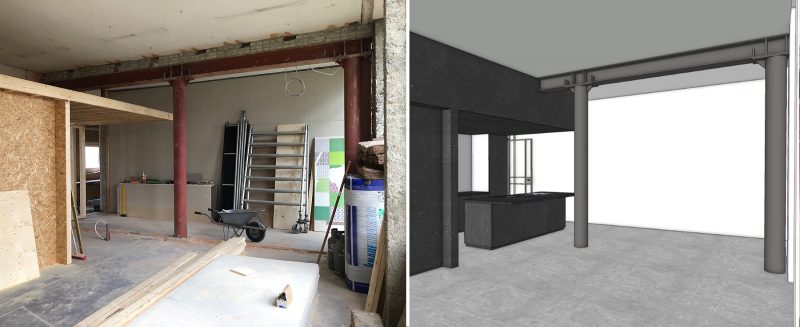
    Within the developer 'de Steenvlinder' formula, the residential units in the monumental school will be further completed by individual buyers under their own management. The new residential community is slowly taking shape. 
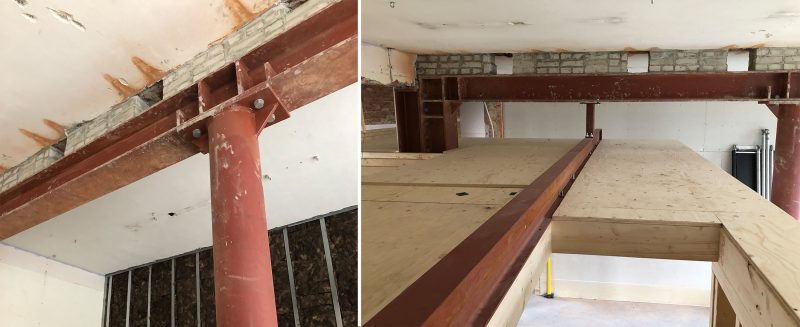
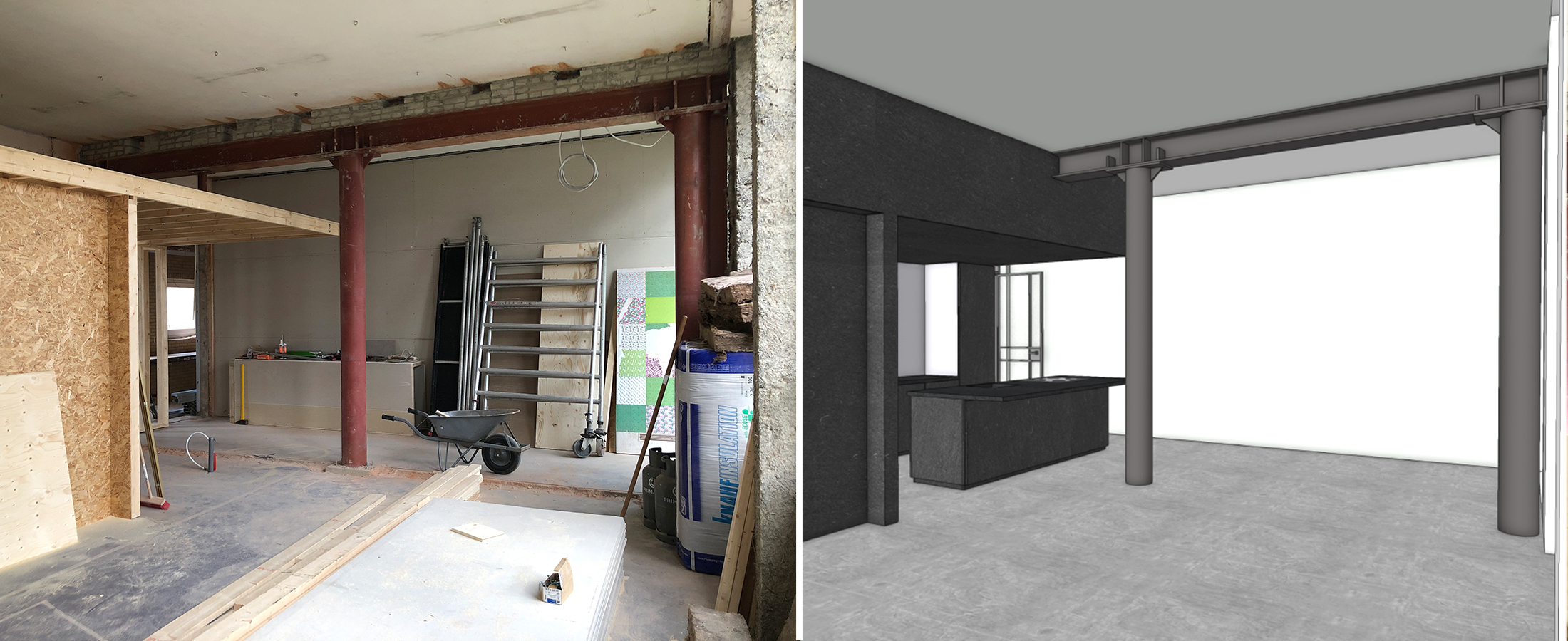
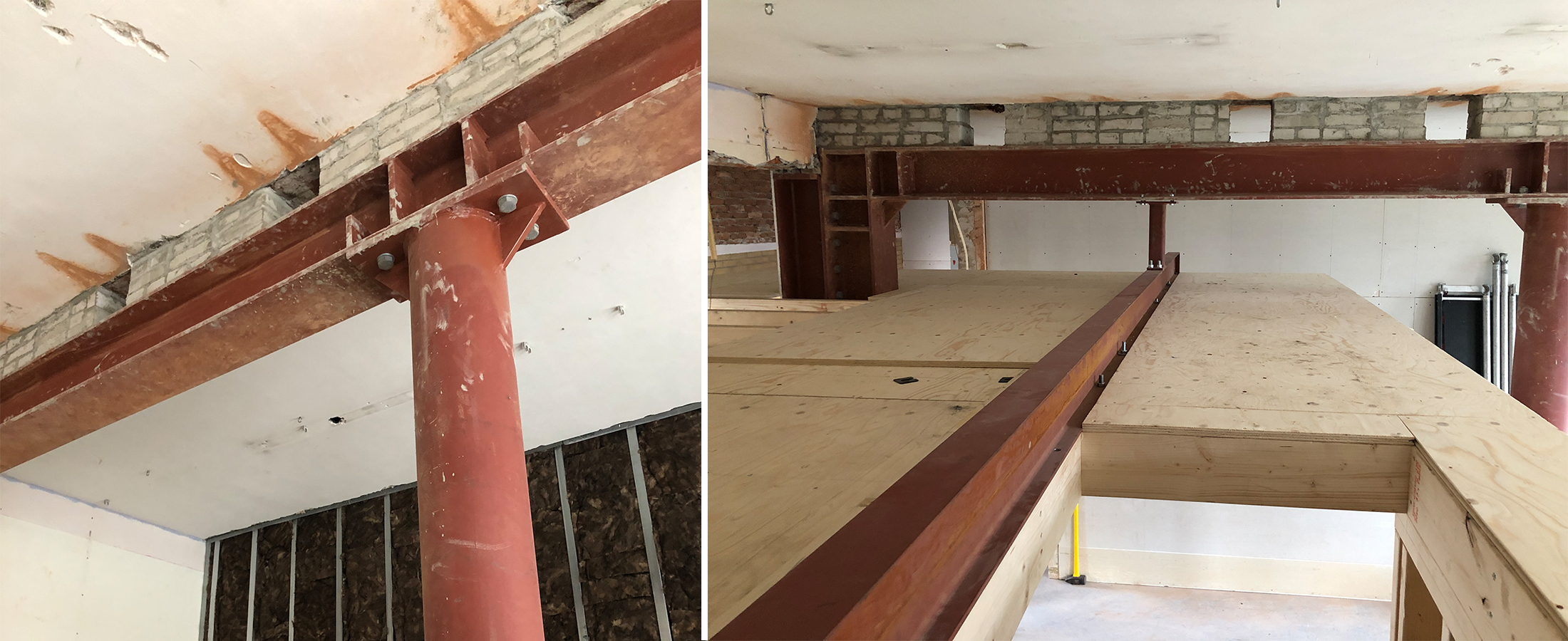
    The transformation of the classroom and part of the hallway is in full swing. Contractor AvS from Stompwijk has now completed the demolition work and structural improvements. A start has been made with the installation of the framework of the “roomdevider” that will be placed in the middle of the room.

    Project

    Address

    Design

    Projectmanagment

    Realisation

    De Nijverheid, Leiden

    Toussantkade, Leiden

    MATH architecten

    In-Uitvoering, Zoeterwoude

    AvS, Stompwijk

  • De Kristal, Nesselande

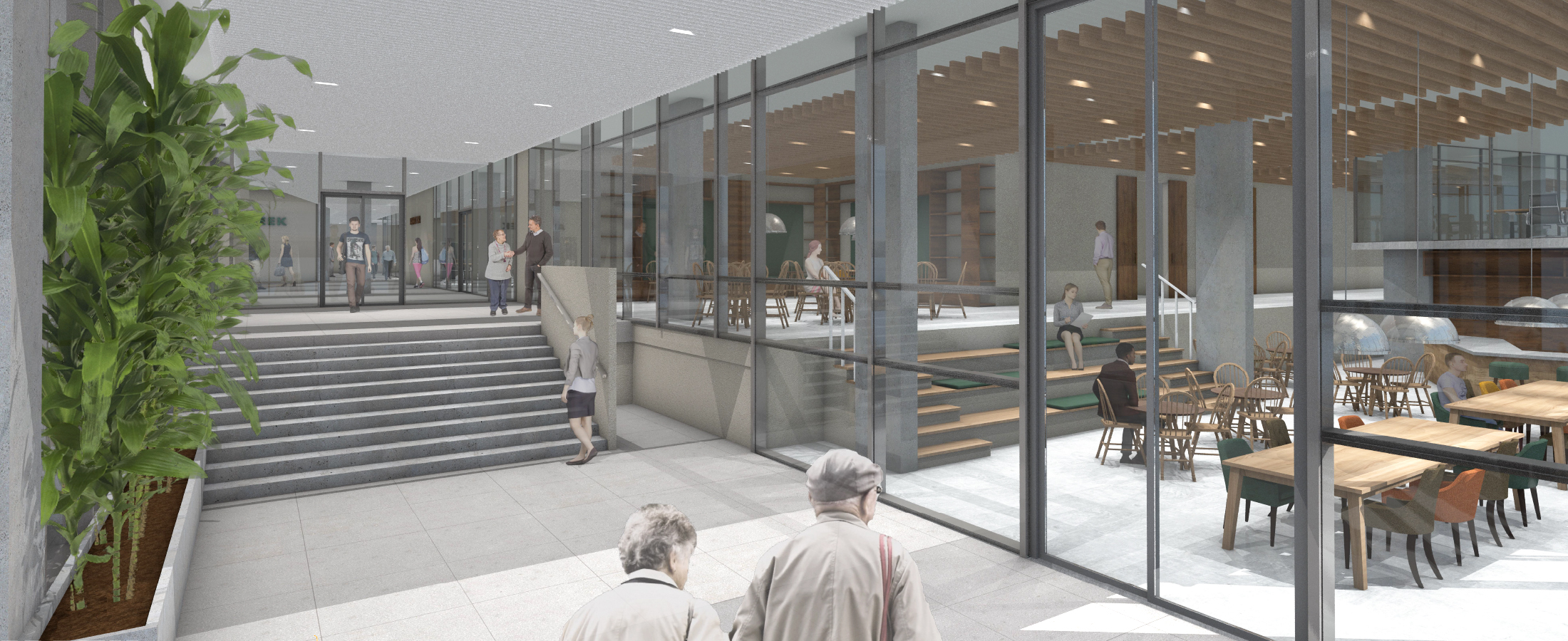
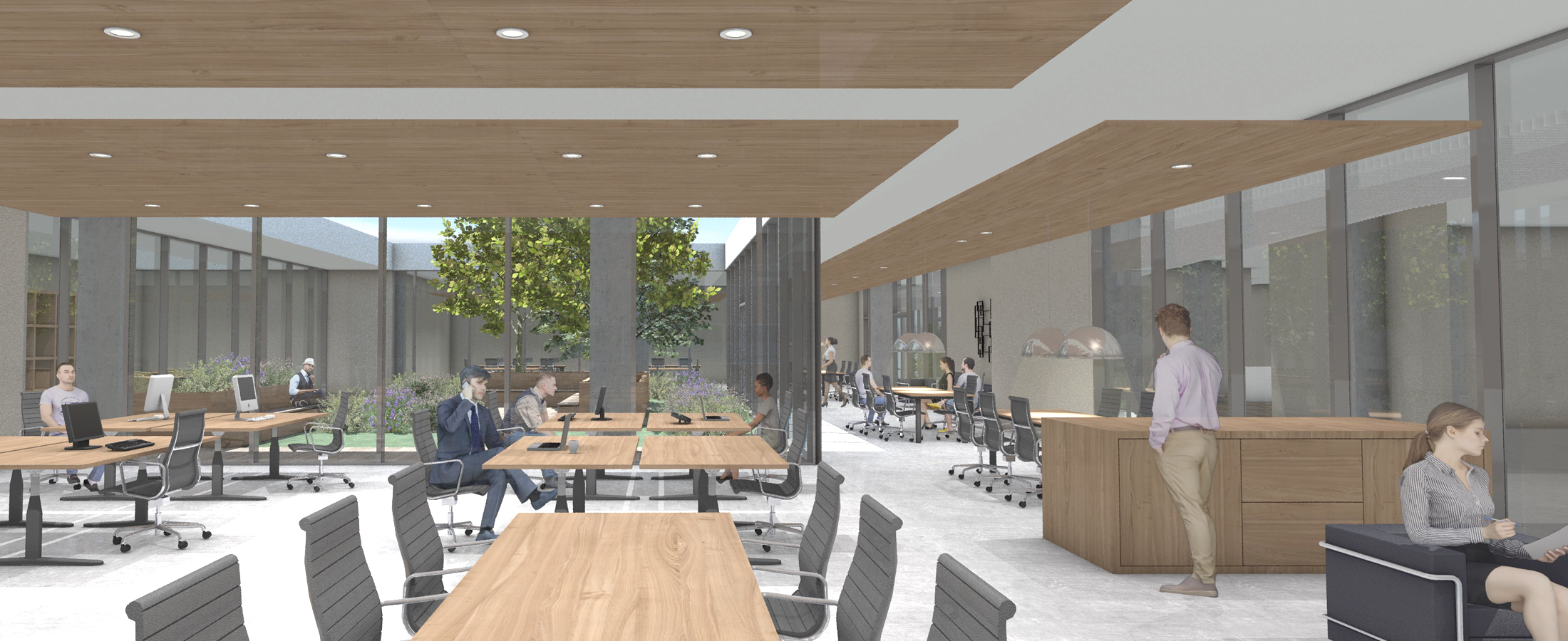
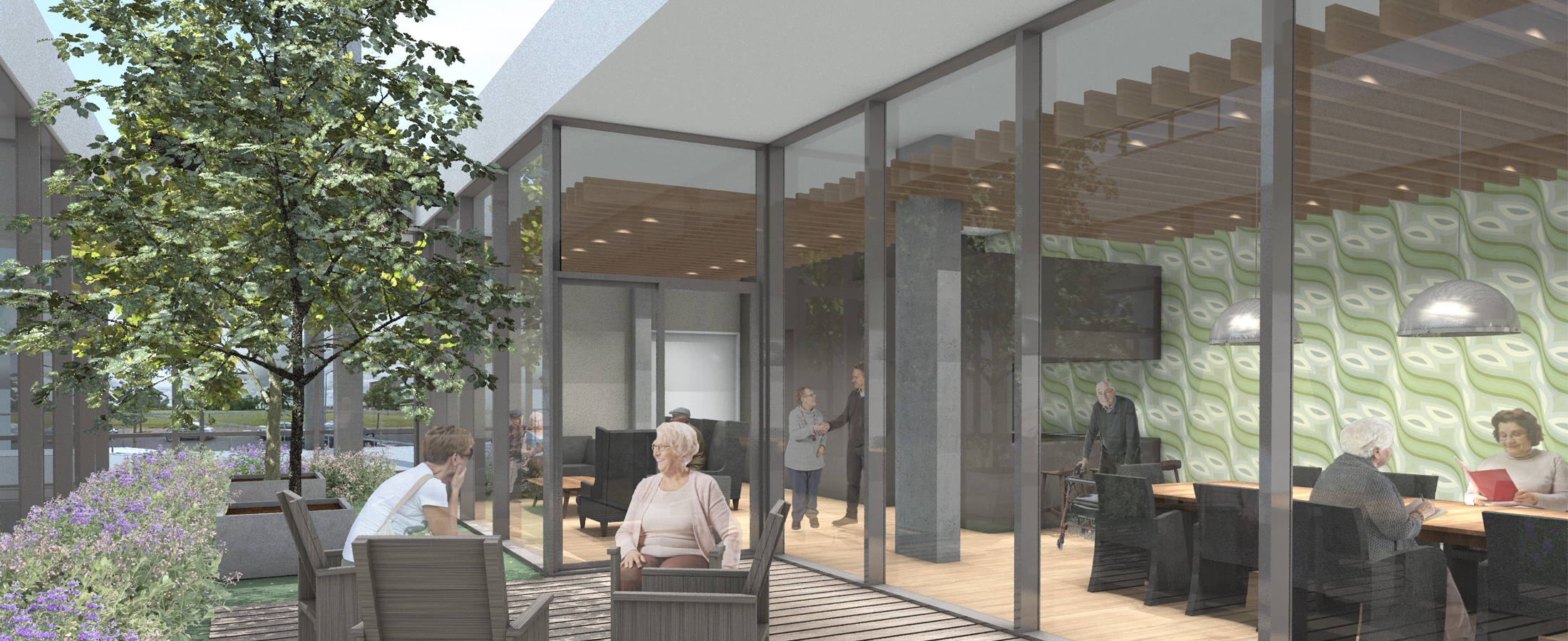
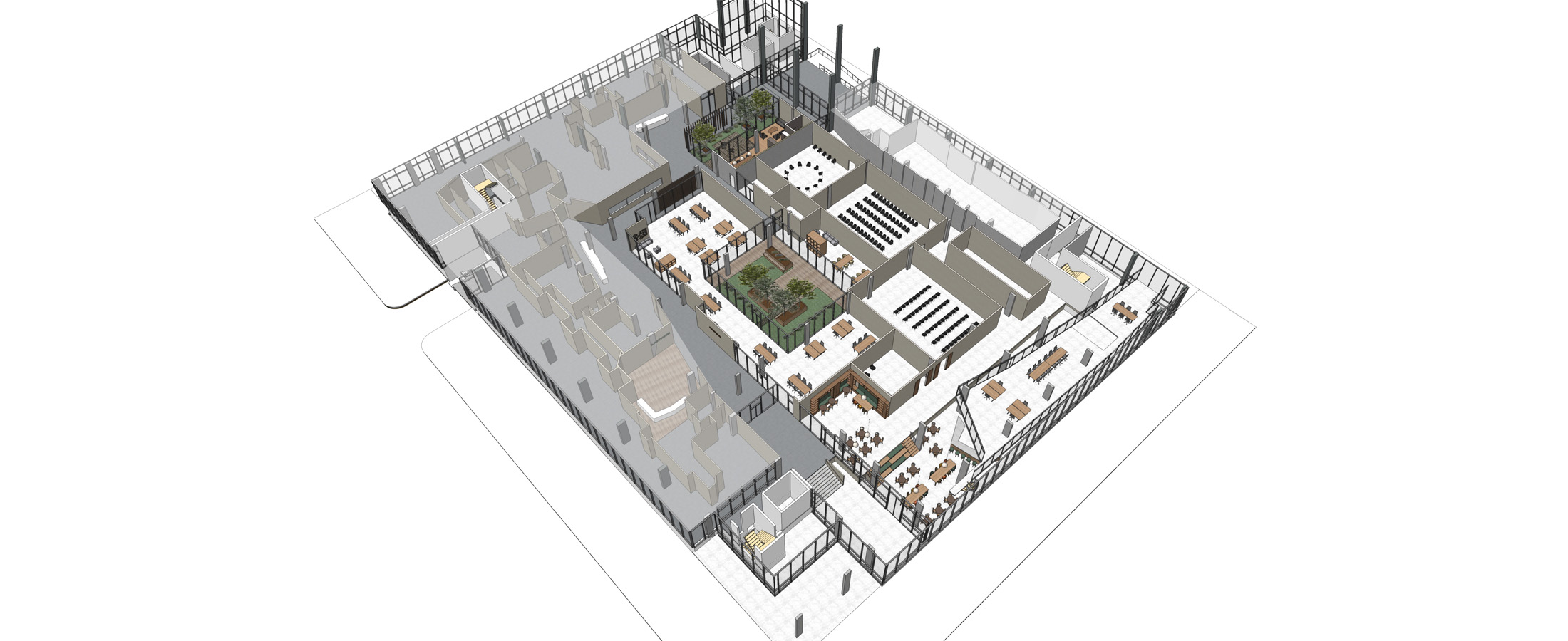
    Kristal is a residential building with approximately 200 apartments for the elderly and is located in the Vinex district of Nesselande. The building's ground floor houses various facilities, including a health center, a community center and a library. Due to changes in the functions housed in the ground floor, there is a need to think about its redevelopment. 

    Commissioned by SOR, MATH has conducted an analysis of the location and the building. Based on the developed vision, a number of scenarios have been investigated for the future transformation.  

  • renovation of residential building Nieuwe Plantage, Delft

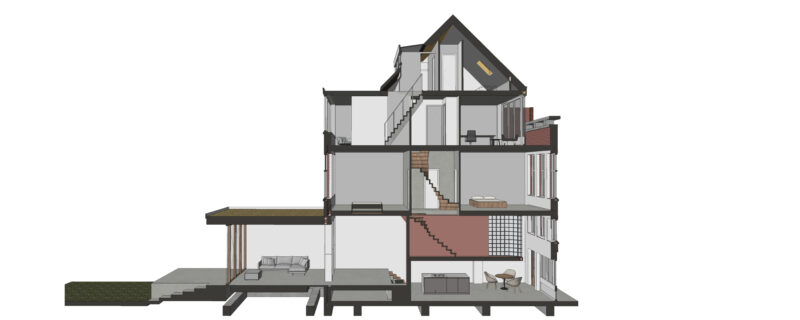
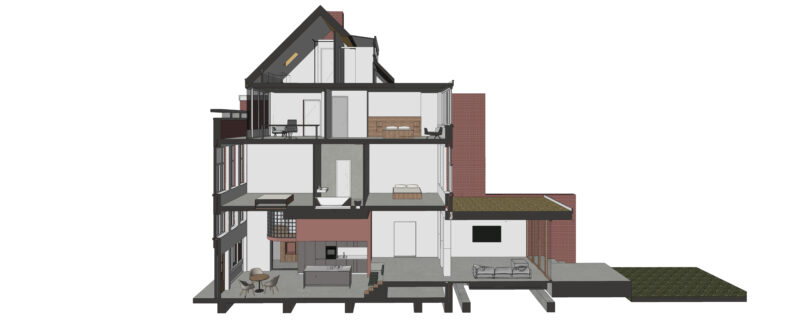
    In the 1970s, an extension was built over four floors next to the stately former home of director Waller of the yeast factory in Delft. The building was already in use as an office building in the meantime. The ground floor and first floor of the extension housed the caretaker's house, while the higher floors were used as an office and accessed from the adjacent building. The building has the status of a protected cityscape.

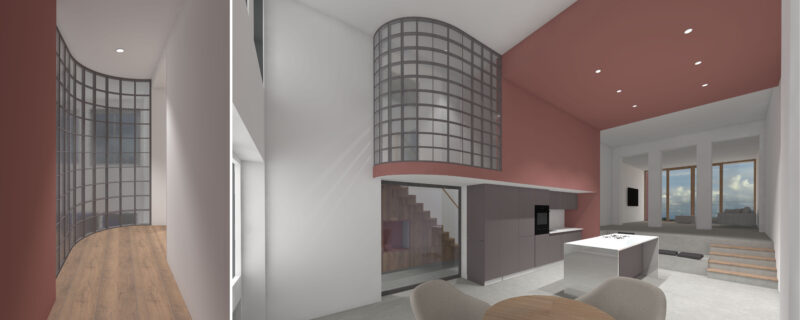
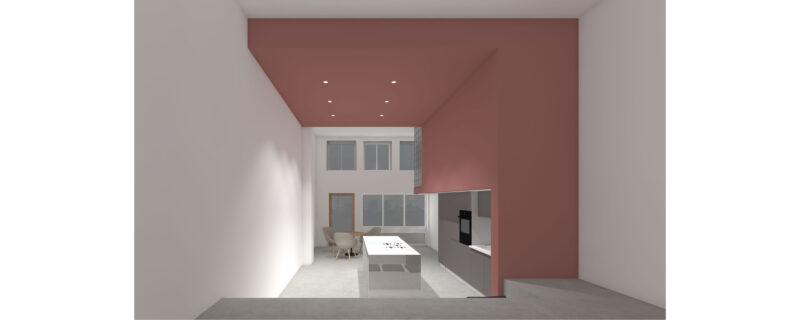
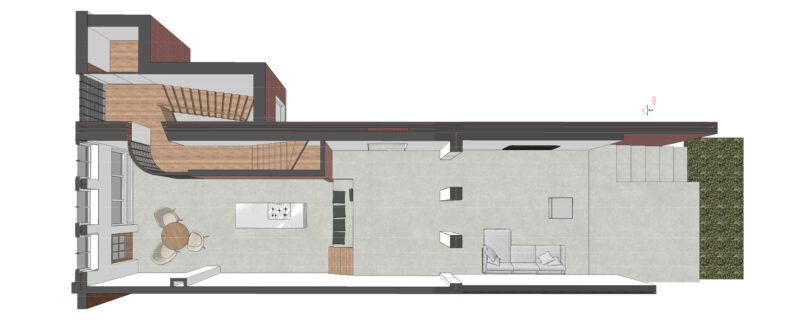
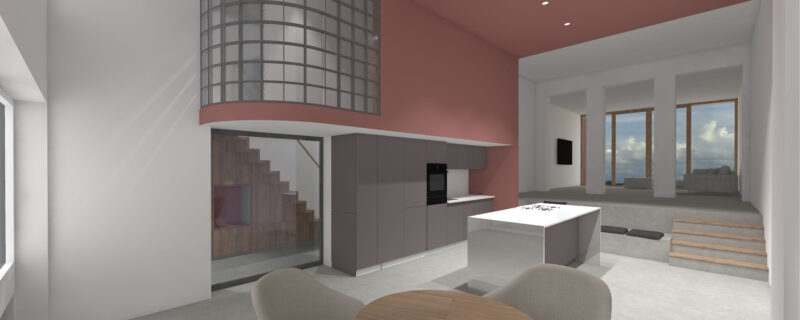
    The current owner wants to transform the extension into one independent home over all floors. The complexity of the design mainly lies in finding a solution for the vertical access to all floors. By introducing a mezzanine, it is possible to cross from the entrance hall in the side aisle to the heart of the building with the central staircase. The difference in level of 80 cm on the ground floor between the front and the back is maintained, but shifted. The open kitchen is located in the low front part of the house and the living room is located on the raised part at the back. The current rather closed rear facade is broken open and the garden is linked to the living space via an extension.

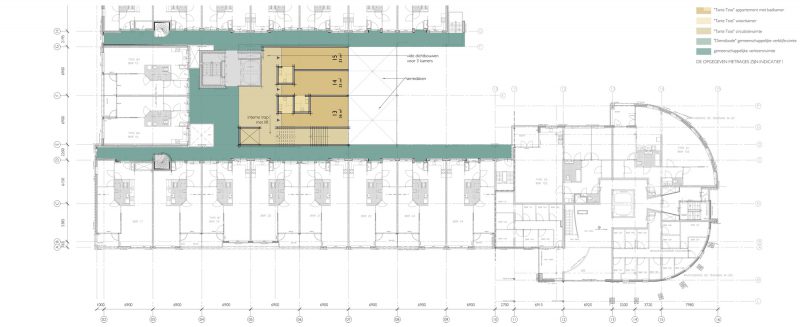
  • “Tante Toos”

    Coöperatieve P.Bell & Friends en Aafje Francise bedenken en ontwikkelen nieuwe huisvestingsconcepten voor ouderen. Hierbij zoeken ze vooral bestaande locaties en woongebouwen waarbij aansluiting wordt gezocht bij de lokale sfeer en het aanwezige karakter.

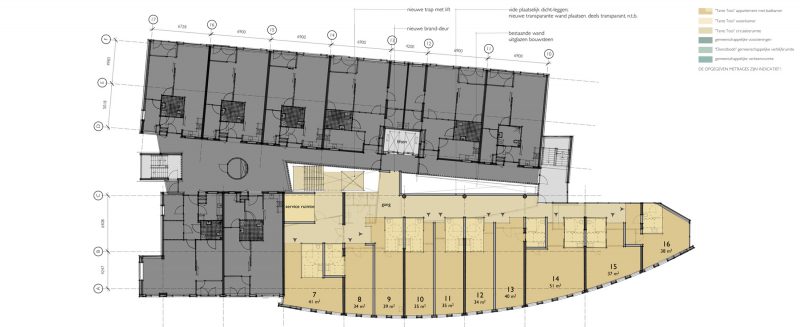
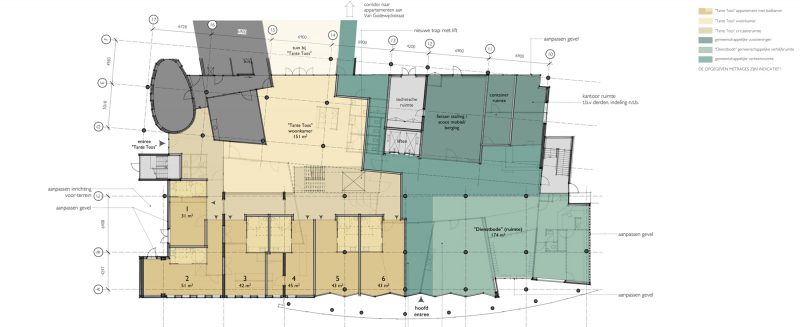
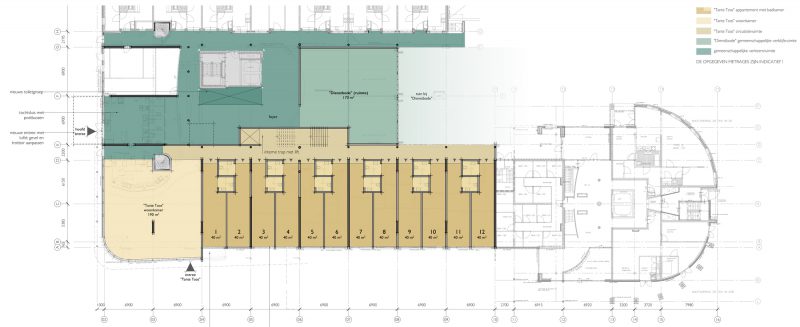
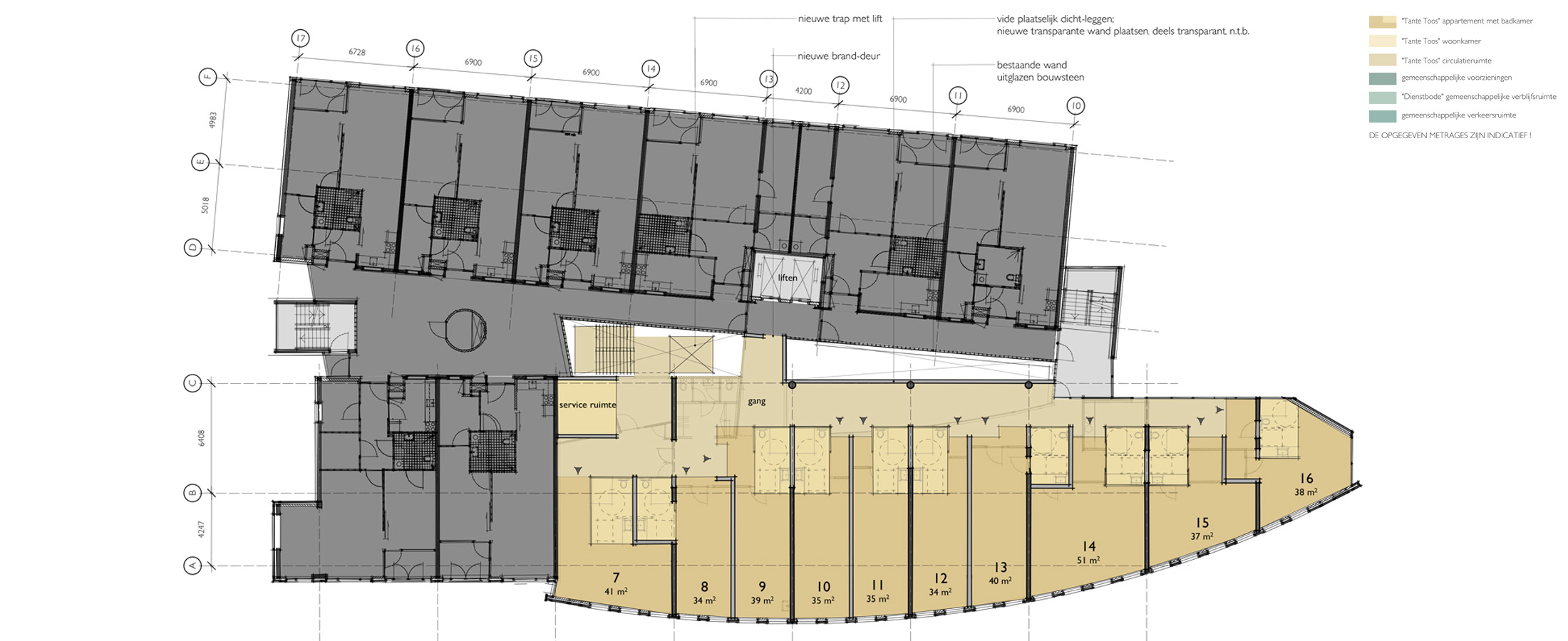
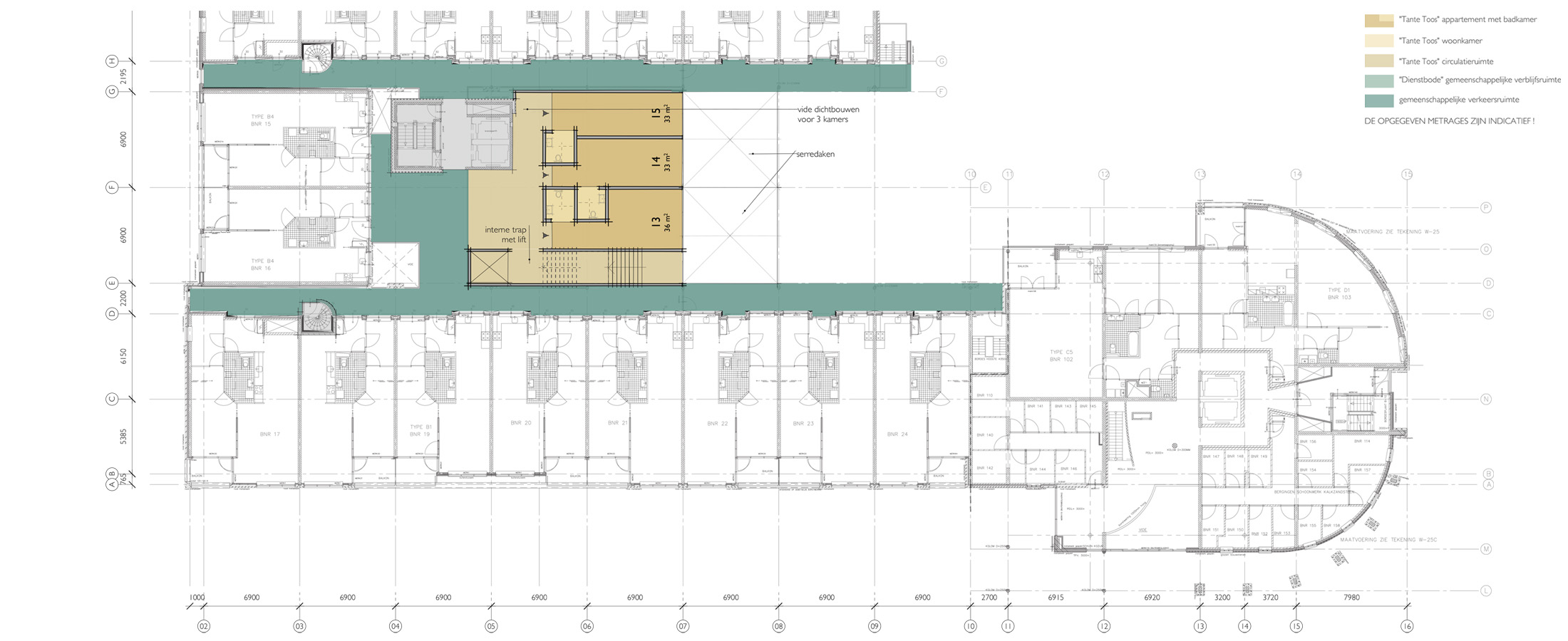
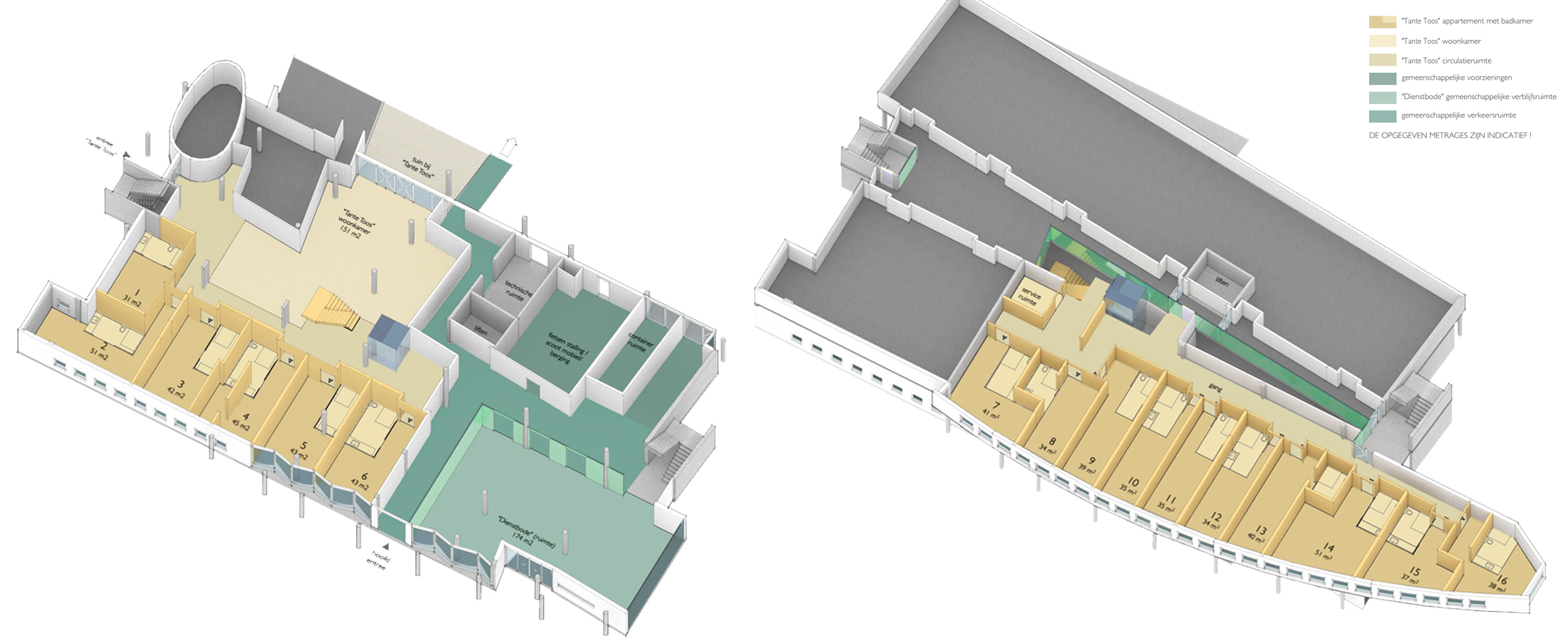
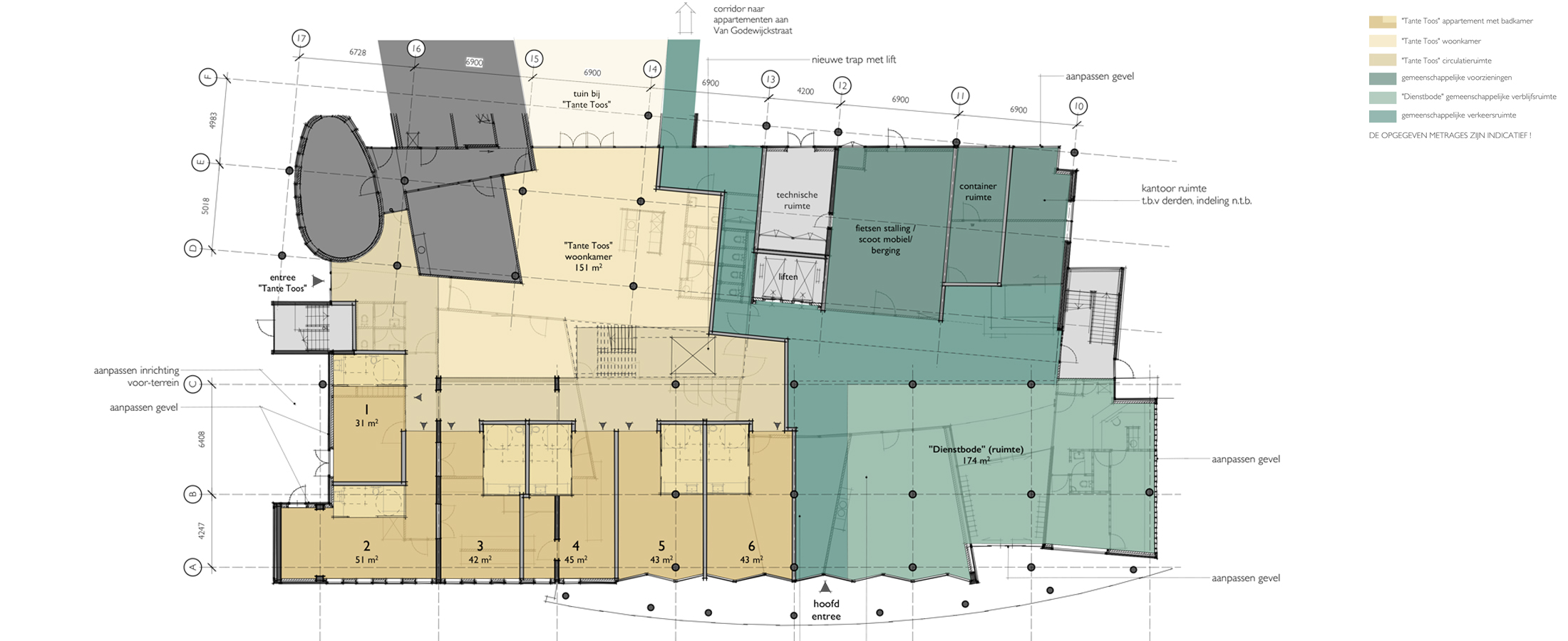
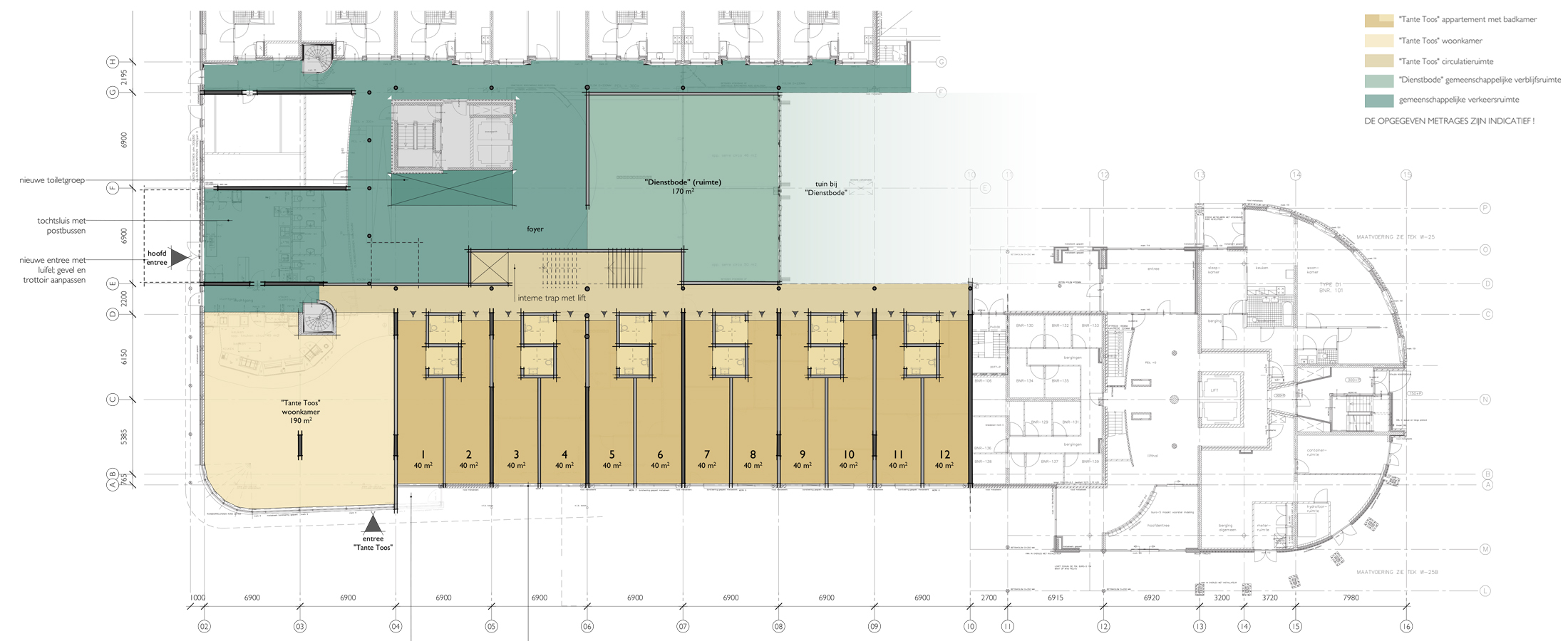
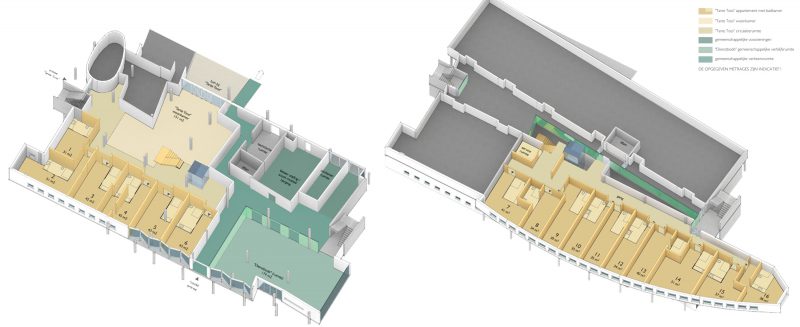
    MATH has studied the possibility to integrate the so-called “Tante Toos” concept in various existing residential buildings.

    In a “Tante Toos” group, approximately 15 elderly people with dementia live together in a small-scale residential community which is run by an independent entrepreneur who provides care for their needs. Each resident has an independent living studio with a wheelchair accessible bathroom. The residents meet every day in the common living room with an area of approximately 150m2 to 200 m2. The living room is equipped with a large kitchen where communal meals are prepared and has direct access to a private garden.  

  • Charley Tooroptoren, Nesselande

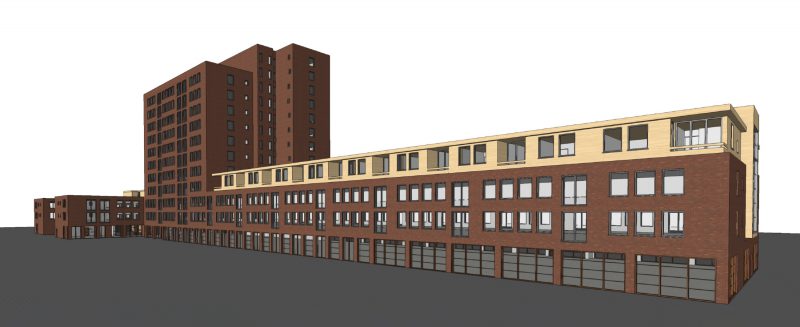
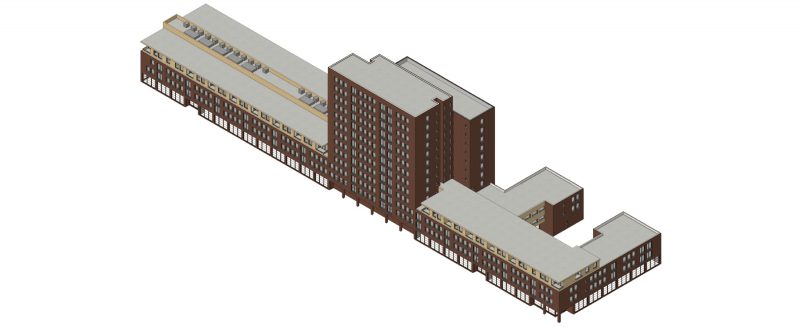
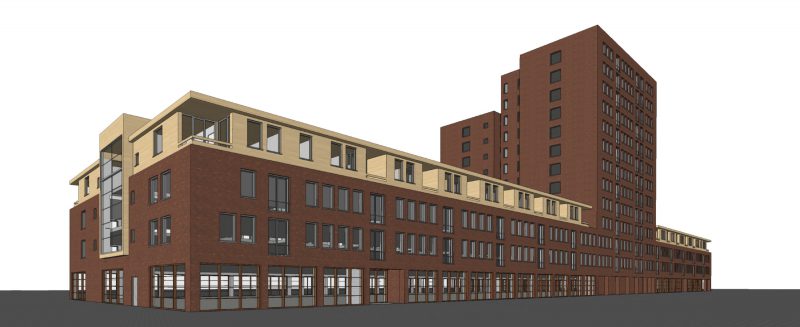
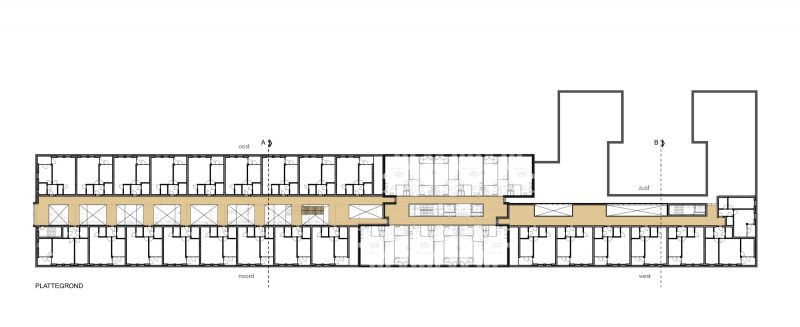
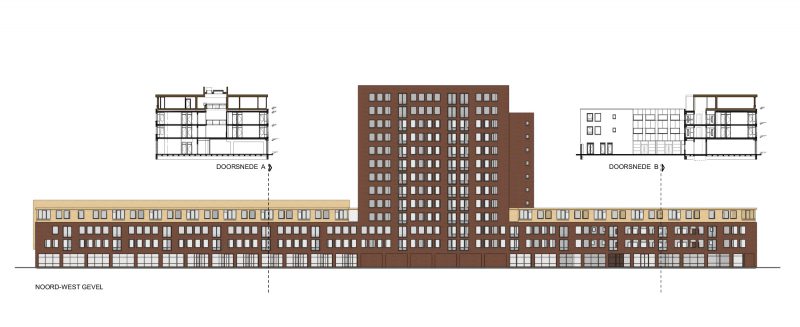
    SOR is investigating the possibilities to expand its existing residential complexes and has asked MATH architects to do an exploration for the “Charley Toorop Toren”. The aim is to realize as many small houses (50 to 60m2) as possible without major interventions. There are currently 136 homes in the building. 

    In this study, five different layouts were made of possible extensions on top of the lower roofs of the building. The minimum variant provides 17 additional houses and a maximum variant yields 54 houses.

    Since the topping has to be constructed lightly, a contrasting appearance is also chosen. Where the basement and the towers are made of red heavy brick, the topping will have a light-footed wooden appearance.

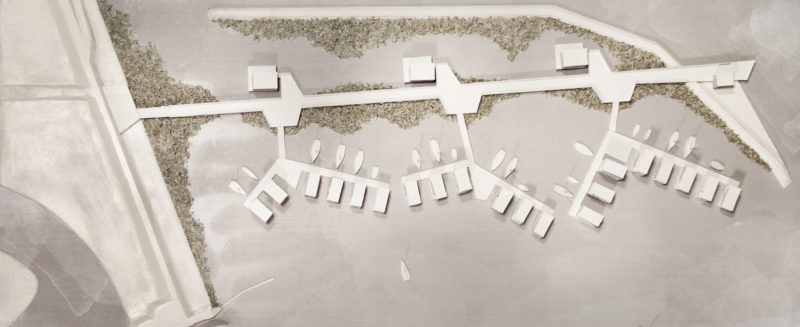
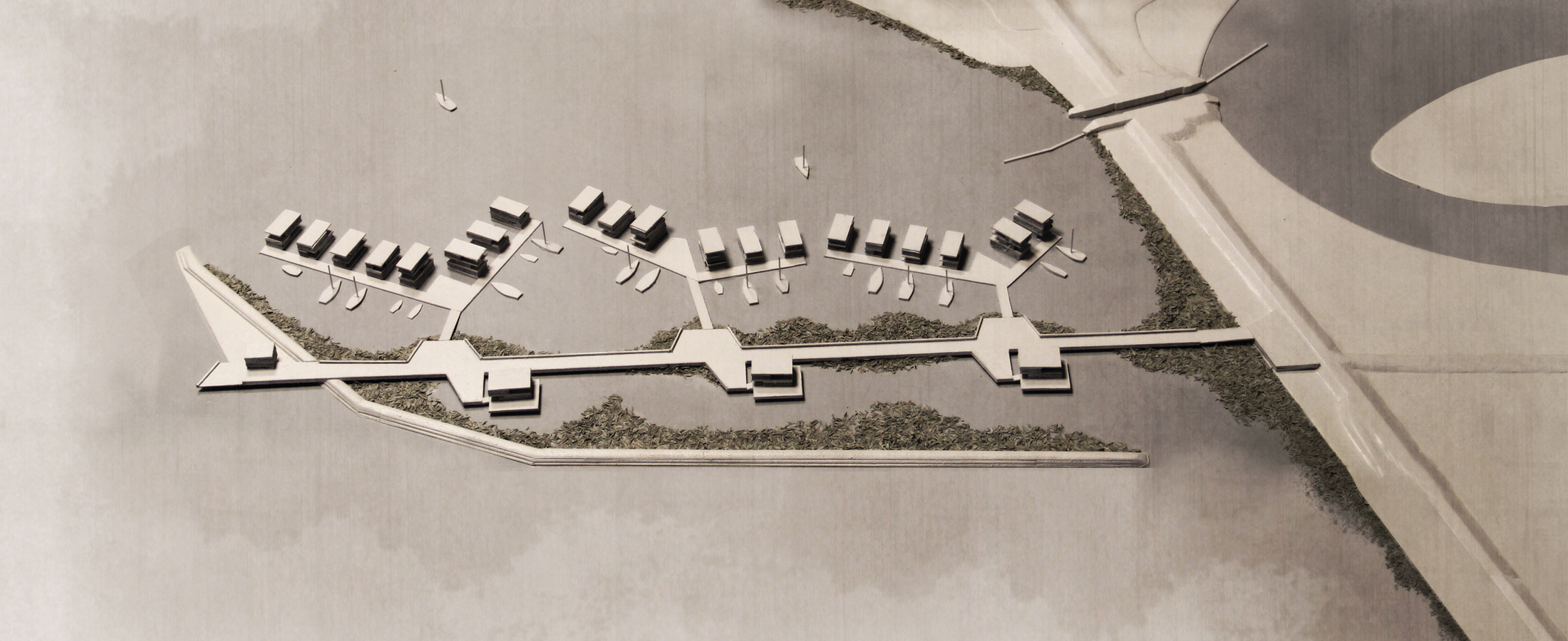
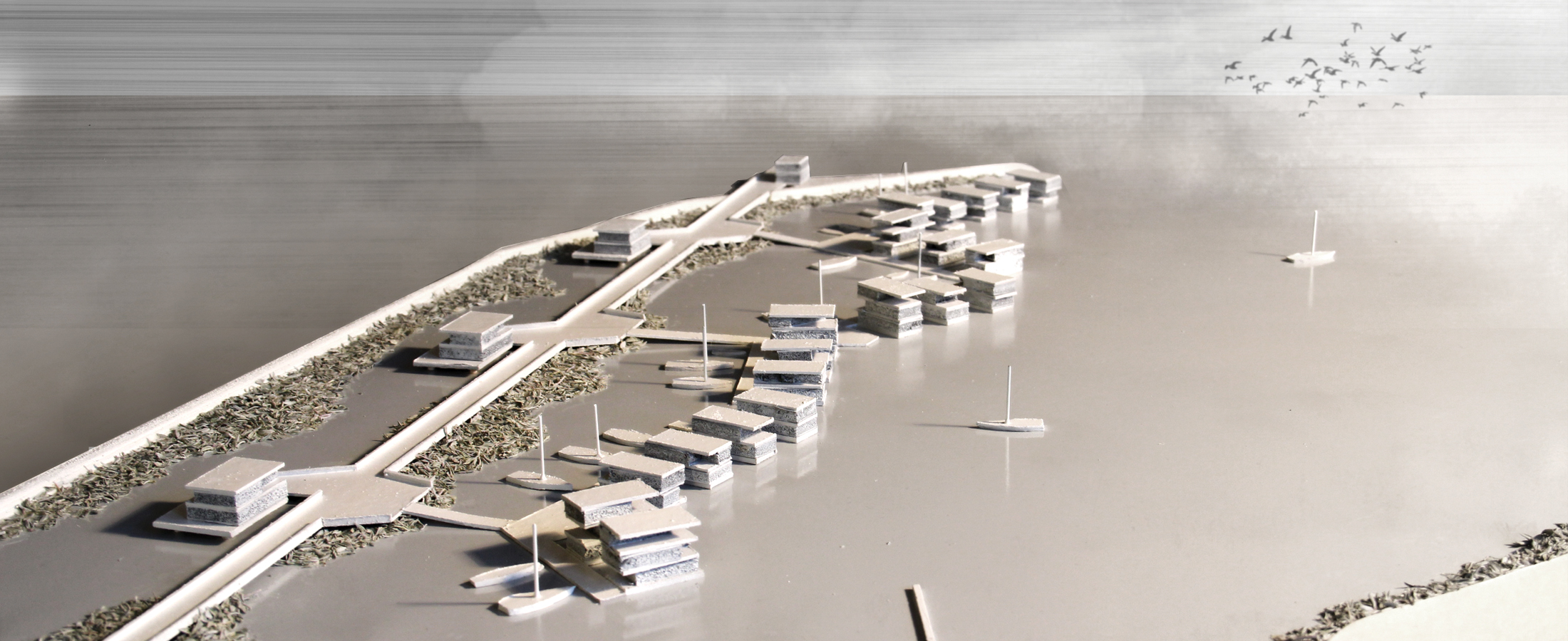
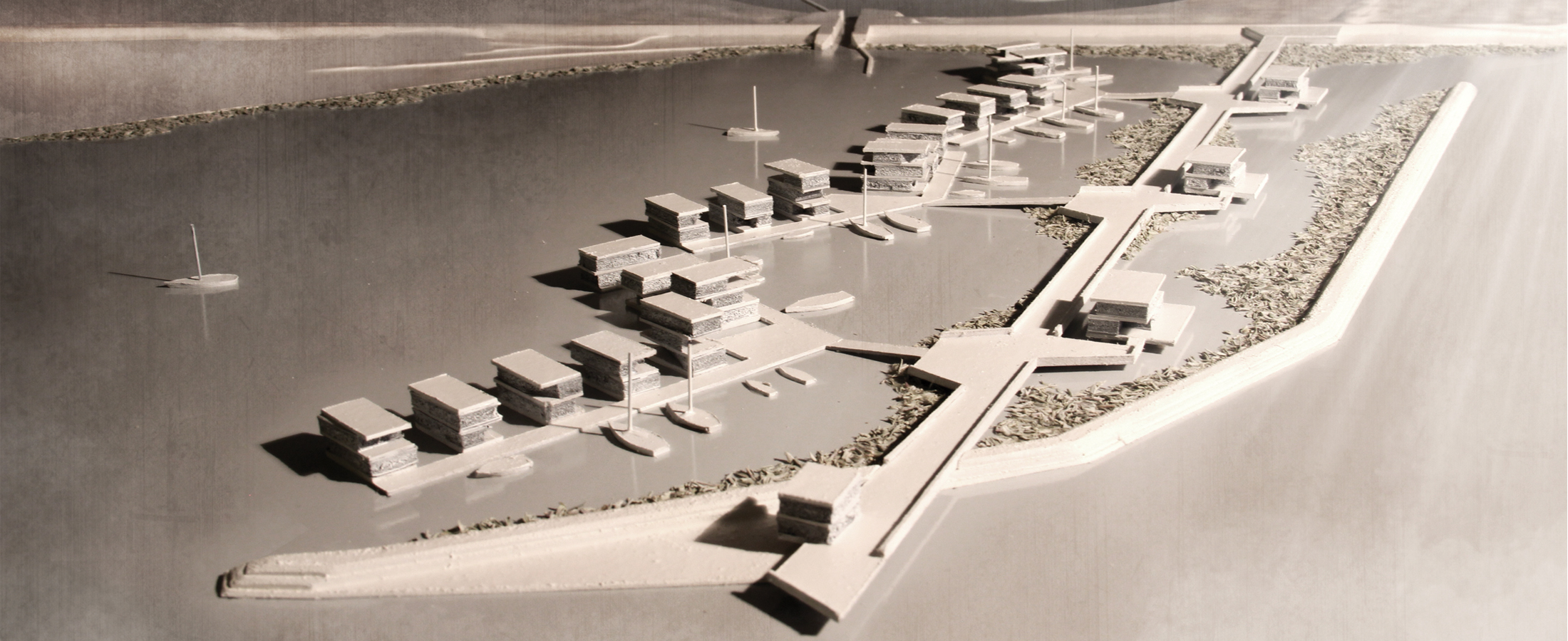
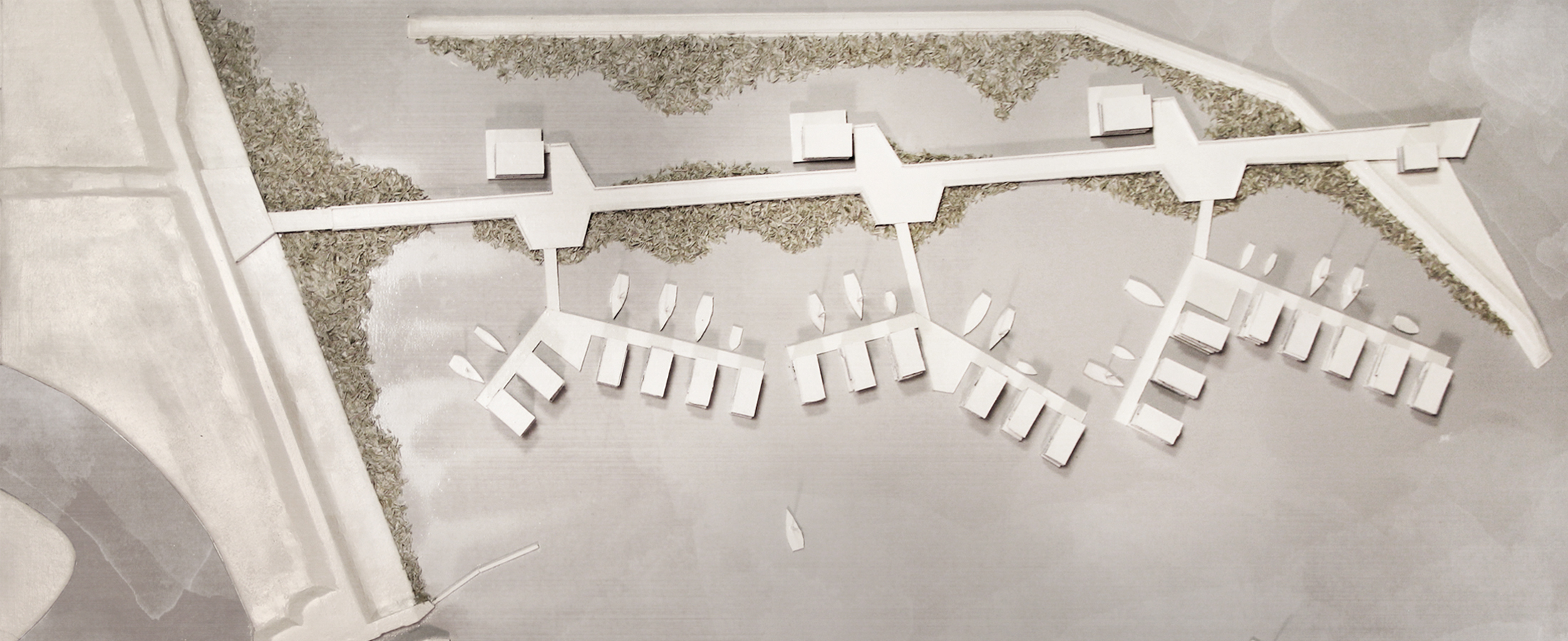
  • Studie Waterwonen, Gooimeer

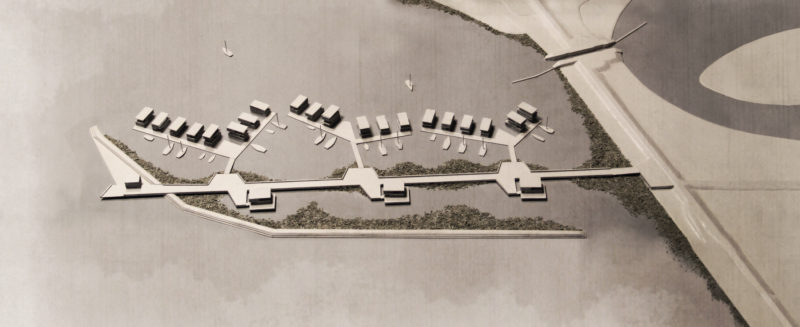
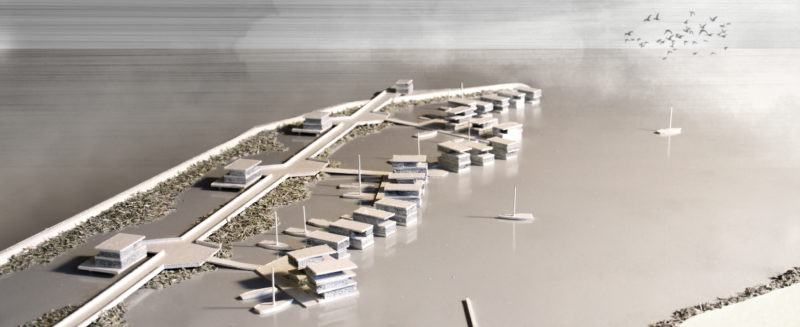
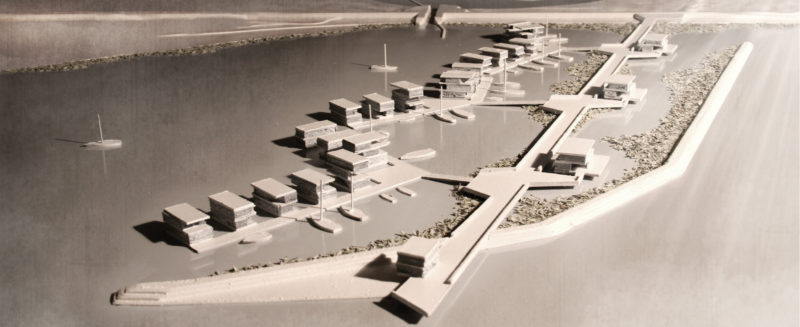
    Drijvende woningen staan de laatste jaren erg in de belangstelling. Er is veel aandacht voor de techniek en architectuur van dit relatief nieuwe concept. Wij wilden in deze studie ook veel aandacht besteden aan de “stedebouwkundige” ruimte. De grote maten van het meer worden stapsgewijs teruggebracht naar de menselijke maat van de waterwoningen, zonder afbreuk te doen aan die specifieke landschappelijk context. Er is gebruik gemaakt van “stedenbouwkundige” en landschappelijke elementen die bij het water te vinden zijn: lage waterkeringen, rietvelden, bruggen, steigers en havens.

    Een lange “brug” steekt in het water en vormt de ruggengraat van de wijk. De brug wordt beschermd tegen hoge golfslag en kruiend ijs door een waterkering met achtergelegen rietvelden.
    Drie villa’s aan de brug geven perspectief en ritme. Ze vormen de overgang tussen het meer met de naastgelegen grootschalige kadebebouwing en de waterwoningen, die in het verlengde liggen van een groene villawijk met een meer dorps karakter. De waterwoningen vormen een meanderende eenheid die op de grote maat van het meer reageert en samen met de brug en de villa’s de binnenhavens markeert. De havens, bedoeld voor boten van de bewoners, hebben elk hun eigen vorm en sfeer.
    Bezoekers parkeren bij de dijk, de villa’s hebben privéparkeerplaatsen en daartegenover liggen de parkeerplaatsen van de waterwoningen. Vanaf deze parkeerpleintjes loopt men, langs rietkragen en binnenhavens, naar de lagere gelegen “steiger”pleintjes bij de waterwoningen.
    Hier is ruimte voor het spelen van kinderen, voor buurtactiviteiten en voor het stallen van fietsen.
    Vanaf de pleintjes worden de waterwoningen door steigers ontsloten.
    Een luxe uitspanning met terras en strand – aan de andere zijde van de waterkering – is het sluitstuk van een boeiende route over de brug.